
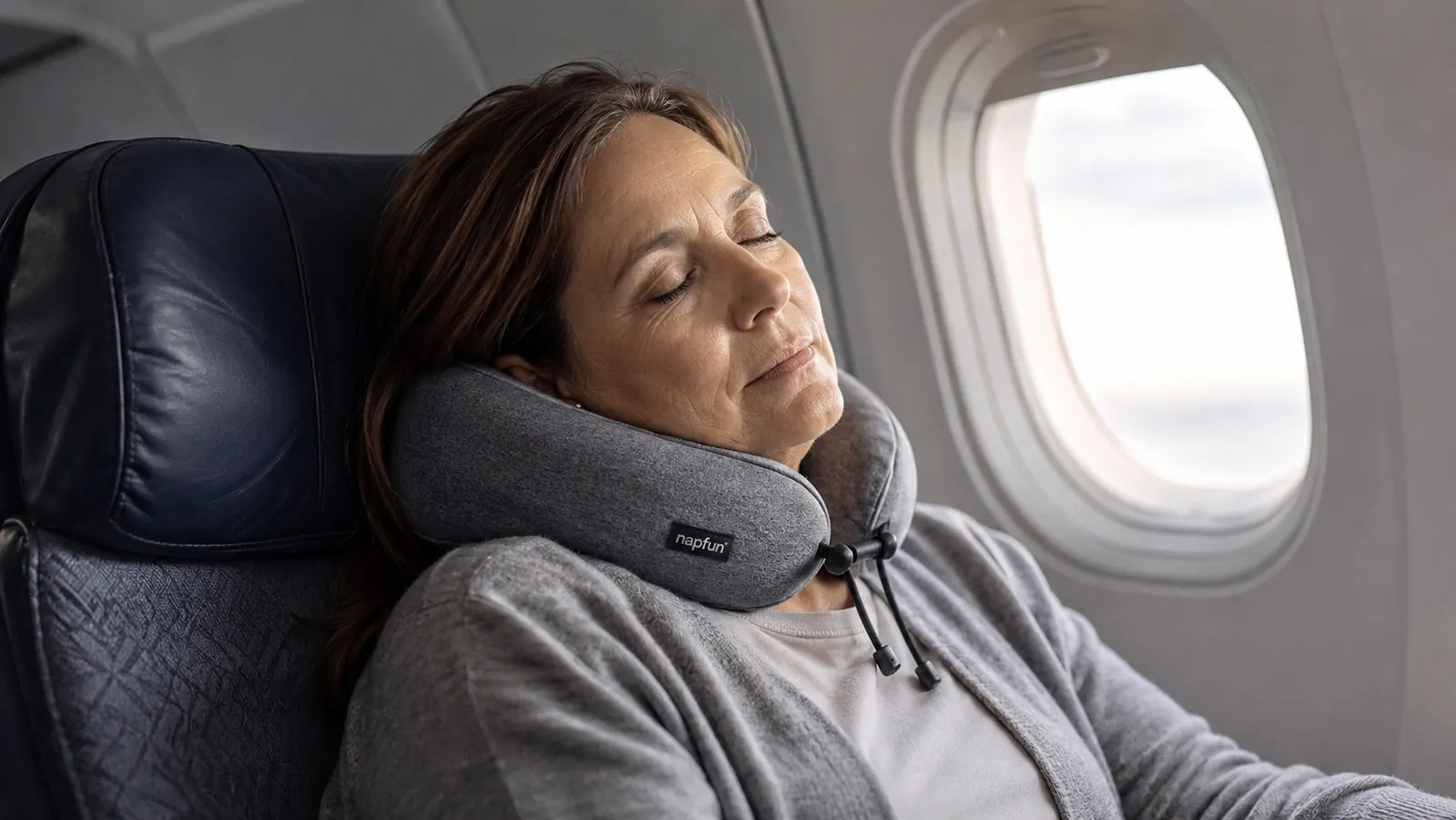
Two memory foam travel pillows, one at roughly a fifth of the other price. If you have ever spent eight sleepless hours hunched over a tray table, you have already asked yourself whether the cheap one is good enough, and the answer is not the obvious one. I flew four legs in the last six weeks with the napfun memory foam pillow around my neck, and I know the premium Cabeau Evolution well enough from years of travel to tell you exactly what the extra money buys.
Short answer: the napfun is the smarter buy for most people who fly a few times a year. The Cabeau is the buy for someone who sleeps on planes every week, sleeps hard, and treats that contoured cushion the way a good cook treats a favorite knife. The gap in comfort is real, but so is the gap in price, and the price gap is wider. Here is the honest breakdown from real legs, not from a spec sheet.
| napfun Memory Foam | Cabeau Evolution | |
|---|---|---|
| Price | Roughly one fifth of the premium options | A much larger spend for the same basic job |
| Neck support and foam | Firm memory foam that holds its shape for hours | High-density contoured support that cradles the neck more |
| Face fabric on a long leg | Smooth knit, fine for a short nap | A cooler touch that stays less clammy on long legs |
| Fits a full carry on | Compresses with its carry bag into a small corner | Bulkier and eats more of your limited space |
| Regret risk | Low, since the spend is small and the test is honest | A larger outlay if the shape does not suit your neck |
How I Tested These on Real Flights
I do not believe in testing pillows on a couch or against a wall in my living room, because neither one is a plane. So I ran these the way the purchase would actually happen. I flew a red eye from Seattle to Chicago with the napfun, then the same route a week later with the Cabeau. I flew twice more, once each on a shorter day flight, and I kept a mental note of one thing only: whether I woke up with a head that wanted more sleep or a neck that wanted a heating pad.
Every pillow feels fine on the ground. The test is hour four, when the seatbelt light is off, the cabin has gone quiet and slightly warm, and your head wants to fall sideways. That is the honest moment to judge neck support, cool fabric, and whether the shape holds up when you are not awake to fix it. Call it ten minutes in a store and you will always pick the cushion you are not about to fly with. Call it a flight and you find out the truth.
Where the napfun Wins
Price is not a small win here. It is close to the whole argument. Because the napfun sells for about a fifth of what the premium pillows ask, it does the one job a travel pillow actually needs to do: stop your head from rolling forward onto your own shoulder. I bought mine on a whim before a family visit last spring, fully expecting to replace it within a year. Seven flights later, across two continents, it is still the pillow I reach for every time.
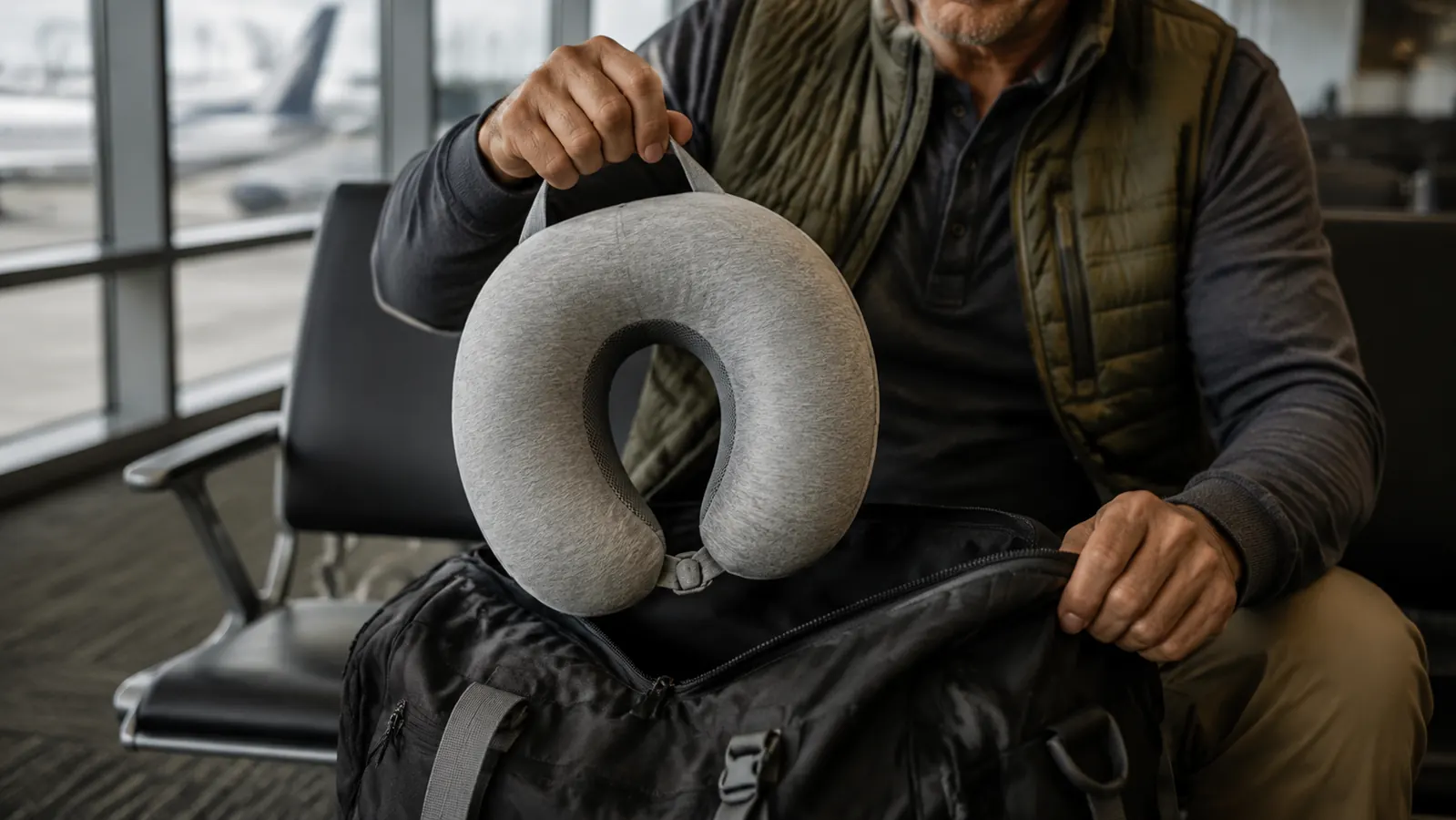
It also travels lighter, and for a carry on only traveler that matters more than the foam density. I pack a week of clothes into a backpack with no checked bag, so a pillow that swallows a whole compartment is a pillow I leave home. The napfun presses down flat with its carry strap and tucks into a corner you barely notice until you need it. When the spend is this low, the pillow earns its keep by simply being in your bag on the leg you forgot to charge your headphones.
Where the Cabeau Wins
I will not pretend the premium is wasted, because it is not. The Cabeau Evolution uses a denser, more shaped memory foam that cradles the back of your head rather than merely propping it. On an eight hour flight across the pond, that structure is the difference between arriving with a stiff neck and arriving from something that felt like real sleep. That single difference is worth a lot, and I would not be the one to argue anyone out of it.
The face fabric is the other honest win. The Cabeau runs cooler over a long flight, and anyone who has sat in a warm cabin knows that a clammy cheap face fabric is exactly where the budget saving starts to feel false. If you fly long hauls monthly, sleep hard, and would happily pay for anything that turns those overnight legs into genuine rest, the Cabeau is flat out the better pillow. Do not let me talk you out of it if your neck is telling you otherwise.
The budget pillow that finally let me sleep in a window seat
I flew four legs with the napfun memory foam, and honestly it ended the part of flying I dreaded most. Check today's price. If it does not suit your neck, you are out less than a decent dinner near the airport.
Amazon Check Today's Price on Amazon →What You Really Give Up on the Budget Pick
Let me be direct about the trade so nobody pretends it costs nothing. On the napfun you give up some of the cradle against the base of your skull, and you give up the cooler face fabric on the longest legs. For two thirds of my travel, those two gaps never bothered me. I am asleep by the time the drink cart leaves row two, and my neck is short enough that both pillows reach it about the same. That is not everyone, which is exactly why this article has two answers.
The honest gauge is your own neck and your own sleep. If you have spent your life never once sleeping on a flight, the napfun is not going to magically turn you into a side-sleeper who catches four hours on an overnight. Buy it anyway for the head-stop, because that is the real job, and it nails it. If you genuinely do drift off in coach and wake up rested, that is the reservation the premium money supports, and it is a fair one.
What Actually Matters in a Travel Neck Pillow
After this test I have boiled it down to three things, and none of them is anything you learn from the logo on the side. First, foam that holds its shape. A pillow that goes flat halfway through a night is useless no matter what it cost or what brand patch it carries. Both of these pass, the napfun with a straightforward firmness and the Cabeau with more contoured support below. Second is the fabric against your face and neck, because a clammy pillow wakes you up even when nothing else does.
Third, and the one most people forget, is whether the pillow fits your exact neck and the seat type you usually fly on. A pillow built to feel good in a wide first class seat feels wrong squeezed into a narrow coach seat. If you fly one route over and over, buy for that seat, not for the idea of travel. That, more than a brand name, decides whether a travel pillow stays in your bag or becomes a thing you hate that curls into the back of your closet.

Who Should Buy Which
Pick the napfun if you fly a handful of trips a year, pack light the way I do, and simply want a pillow good enough that you stop thinking about your pillow. If a modest spend gets you through a five hour flight without starting your first day tired and sore, you would rather save the rest of the budget for a better seat or a nice dinner at the destination. That is my life, and it is why mine never leaves my bag.
Choose the Cabeau if long haul flying is really your routine, the window seat feels like home, and sleep on the plane matters more to you than saving the gap between them. There is no wrong pick once you have felt both on a real flight. The only way to know which is which is to test it where it has to work, which is why I keep coming back to the napfun: the test is cheap enough that you can honestly run it twice and keep the better memory on your next trip.
A Few Honest Side Notes
Two things I would tell a friend before she buys either. A fresh memory foam pillow will feel firmer than it will by trip three, so give it time against your neck rather than a verdict on the first leg. And the little clip that closes the cushion around your neck, which both of these have, matters more than reviews admit, because it is what keeps the pillow in place while you slide into sleep. On both of those, the napfun held up fine in my test, and that is the nicest thing I can say about a budget pick most people expect to be a compromise.
One more. Do not judge either pillow on a train or a bus seat you keep at home, because a plane seat reclines only a few degrees and slants forward in a way nothing else replicates. If you find a cheap short routing, fly a quick hop with the pillow before you make the long trip a test bed. That is the only fair way to let a travel pillow prove itself, and it is exactly the kind of thing a busy traveler does not have time to redo on the important flight.
So Which Is the Better Value?
Run the numbers the way a practical traveler does and the napfun wins the value question almost without a fight. Ignore the brand and picture two outcomes. You buy the budget pillow, fly three trips in a year, and it does the job. You are out a small amount and you have money left over for a nicer seat and a real dinner on arrival. You buy the premium pillow, fly the same three trips, and the extra comfort is nice, but your money situation is tighter and your neck is no more rested.
Now add a second year to both. The premium may well be softer and cooler on the minutes before you fall asleep, but the budget one has not worn out, has not gone flat, and has cost you nothing extra to keep. Most travel pillows do not die in a year, and a memory foam shape does not suddenly quit. So the honest math favors the napfun for anyone who does not fly with the pillow every single week. The value is the price gap working in your favor across years, not the first flight.
How to Make Either Pillow Work Harder
If you do land on the napfun, there is a small trick that makes it feel closer to the premium. Pull the pillow around your neck the other way, thicker part toward the back, before you lean back, and lock it with the front clip so it cinches rather than hangs. I learned that on my second flight and it changed the whole feel. The same trick basically works on the Cabeau too, which tells you the difference between these two is less about technique and more about how much structure you want.
My pick after four legs of honest comparing
For most of us, the napfun memory foam pillow is the whole answer, and the premium budget is better spent on the trip itself. Check today's price and let a real flight settle the argument.
Amazon Check Today's Price on Amazon →