
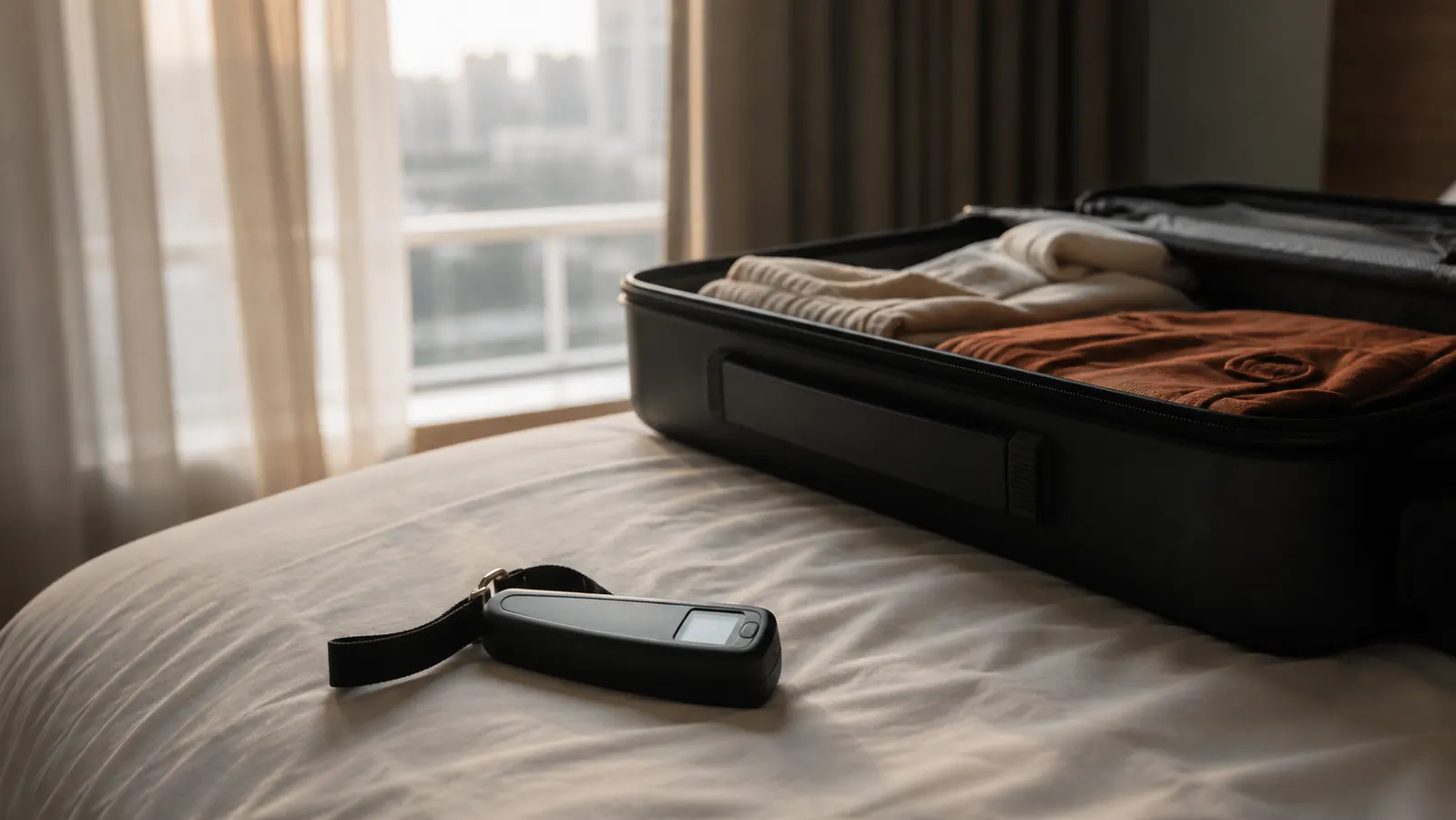
I did not set out to become a person who weighs her bags. I set out to stop being the person standing in the check-in line holding her breath while the agent lifts my suitcase one handed and frowns at it. That frown has cost me before, and it will cost me again if I keep guessing. So three years ago I picked up a cheap handheld scale, thinking it would end the guesswork. It mostly did. The Etekcity luggage scale is that scale, the one with tens of thousands of ratings and a low enough price to throw in your bag and forget. Here is the honest version of what I learned weighing a loaded suitcase on real flights, not what the listing page promises.
What nobody tells you is that the weighing is the easy ten seconds of the whole process. The hard part, the thing you actually have to teach yourself, is how you hold your suitcase so the number comes out true. A soft sided bag that slumps, or a hard sided case with a handle you can only grip sideways, will bend the hook and hand you a reading that is heavier than reality. So this review is half about what the Etekcity measures well and half about the little technique that stops a good little tool from lying to you.
The Quick Verdict
A solid little tool for its price if you fly with a checked bag and hate surprises at the counter. It reads accurately enough to keep you off the fee line. You pay for the low price in three quirks: the plastic feels cheaper than it is, the hook needs the right handle, and you must not store it loose with your keys.
Amazon Check Today's Price →Skip the surprise fee at the desk. Weigh before you leave the room.
The Etekcity reads your bag in about three seconds, to a tenth of a pound, before you haul it down to the elevator. At today's price it quietly earns itself back the first time it keeps you on the right side of the 50 pound line.
Amazon Check Today's Price on Amazon →Why I Bought a Luggage Scale in the First Place
The trigger was a trip two winters ago. I packed for a ten day visit with my sister and threw in a big jar of her favorite bath salts as a gift, the kind of thing that plays once a holiday. The bag sailed past what I expected it to weigh, and later at the counter the number on the tag said I was over by a few ounces. I stood there with my credit card out before a penny's worth of decision had been made, because that is the system the airlines design on purpose. You do the guessing. They do the charging.
That is the honest reason anyone owns one of these. At home, in good light, with the bag laid flat on the bed, you are the only one who has to see the truth. The scale simply moves the moment you learn the number from the cold fluorescent check area back into your own quiet room. That is not a small difference. It is the difference between a trip that starts with a fee and one that starts with a walk straight to the gate.
I have since talked three traveling friends into buying the same tool. One, a nurse who flies to see her grandkids, tells me she uses it every single trip and credits it with two near misses avoided. The other two use it and shrug. That fairly sums up what this thing is. It does not change your life. It removes one category of worry, once per bag, for about the cost of a couple of travel coffees.
How I Tested It Over the Months
My trips are the practical kind. A niece's wedding in Denver, a week at my mother's house for the holidays, a spring visit to my sister on the coast. I fly out of a mid sized airport where the gate agents do the overhead bin weight lift, and I have watched people repack on a table near the kiosk on a Tuesday afternoon more than once. I bought the Etekcity, not because it was the most reviewed gadget in the aisle, but because a scale cheap enough to live permanently in a carry-on, and one you can actually trust on real trips, worth more than a fancy one that stays home.
The scale is small enough to live in the front pocket of my carry on, the same pocket that holds the chargers and granola bars. I use it before every flight with a checked bag, which in a busy travel year is fourteen or fifteen bags. That is enough trips to know it holds its charge, holds its zero, and holds up to the tug of a loaded suitcase swinging free on a strap.
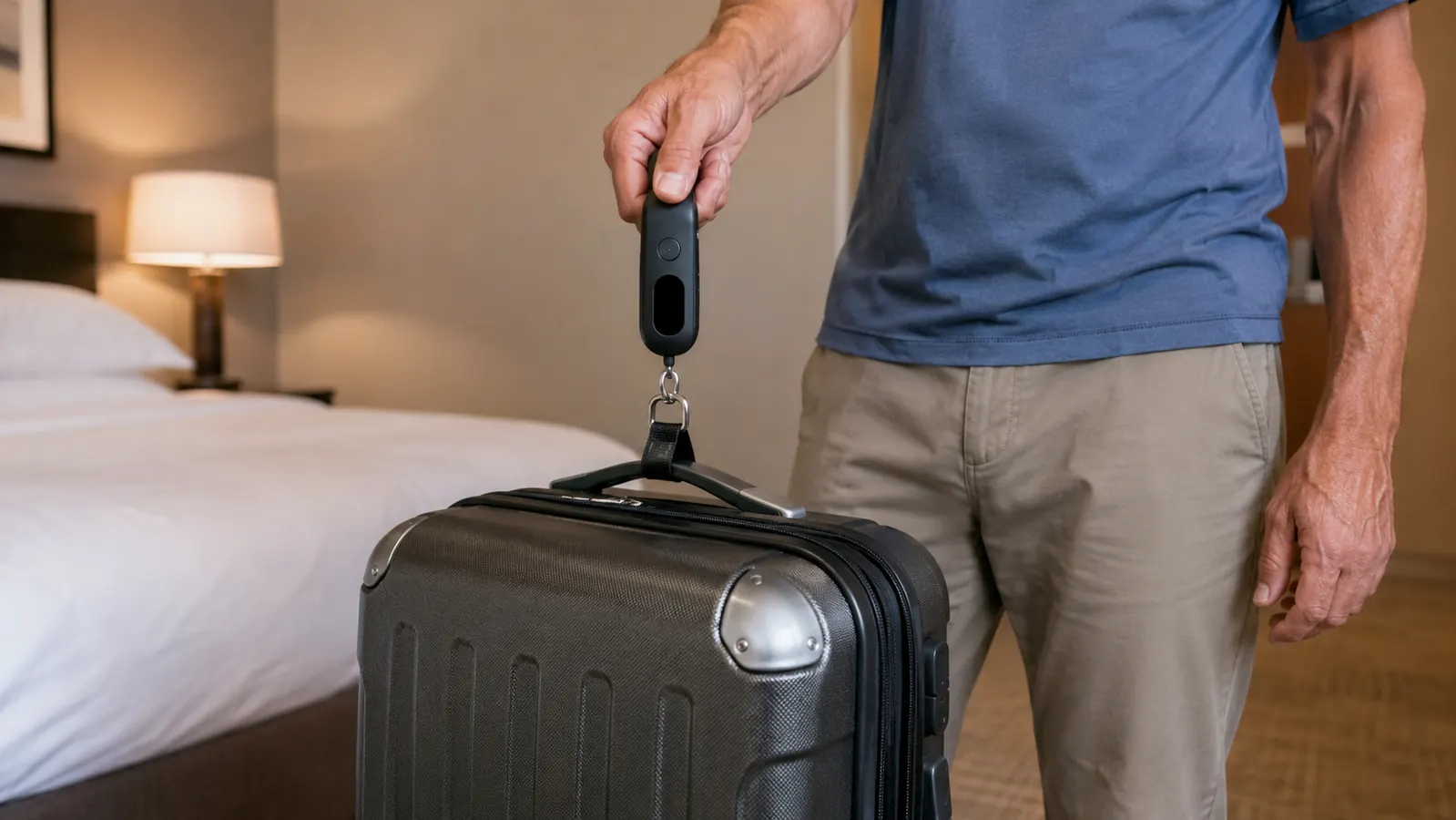
One lesson came fast. The reading you care about is the one after the numbers stop moving, not the first display. Give it the full three seconds, let the strap hang straight, and the tenth of a pound it settles on is a real number you can act on. Grab the early number and pull it away and you will spend the whole trip wondering whether you actually cleared the line. Slow down, let it settle, and you have a figure you can bank on.
What This Scale Gets Absolutely Right
The reading is the point, and it is an honest one. I have crossed it against the tag the airline prints at the counter and against the agent's own scale on several flights where they let me test. Across about five sets of checks it stays within four tenths of a pound of the airline's number. That margin is exactly what protects you. You do not need laboratory precision to keep a loaded bag safely under the line. You need a tool that is honest enough to leave you a cushion, and this one is.
The unit switch matters as much as the number itself. I fly a couple of budget carriers that quote the limit in twenty three kilos, and the Etekcity reads in both pounds and kilograms from a single press. I do not have to fumble a conversion on my phone in a far room, and I do not have to do the mental math that turns 23 kg into a number I can hold clearly. That feature has quietly saved me more than once.
Three years in, the accuracy has not wandered. The first scale I owned drifted badly after a couple of years, but this one still matches the counter within the same small gap, which tells me the sensor was built properly. It has been knocked around the bottom of a carry on for dozens of trips and it has not lost its calm. For a gadget that costs what this one costs, staying this steady over that long is the very best thing I can say about it.
The Annoyances Nobody Puts in the Product Page
It is not a five star gadget, and it does not pretend to be. The first thing you notice is the plastic body when you close a hand around it and push against the case. It does not crack under forty eight pounds, but it flexes a little in a hard two handed squeeze, and that made me stop short the first time. It is firmly molded, not flimsy, but it feels exactly like the budget tool it is, not a piece of heirloom kit. The short strap is the same story. Adequate, never generous.
The genuine quirk, and the one I wish someone had warned me about, is the hook. It hooks well onto a clean, rigid top handle. On a soft, squashy duffel with a soft top grab, the hook slides halfway off and takes half the load sideways, and you end up with a number that reads several ounces heavy because the bag is tipping while it pulls. I have learned to loop the strap around the pair of handles that meet at the top so the bag hangs flat. That is a learnable five second habit, but it is a habit, and a brand new owner expects to clip on and be done, which this scale does not do.
A second small annoyance is keeping it near your keys. I once left mine in a pocket with some change, and the internal magnet let go and the gauge wanted to wait for a flat zero. It is not a breakage, but it teaches you to glance at the display before you trust the ring. None of this is terrible. It is all the honest texture of a cheap tool that needs a little knowing, which is exactly what a real user meets and the sales photo never shows.
Battery and Power, the Part Nobody Photographs
The habit that keeps this little scale honest is the battery, and everyone assumes it matters more than it does. The Etekcity runs on a pair of button cells, the kind you might already own for a watch or a kitchen scale, and it sleeps with no real draw when off. I have left it in a cold car for a month and it kept its charge. When the display starts to flicker, I change the cells in under a minute and I am back to weighing in the bedroom.
The one thing it will not do, and the thing you might not think about until you reach a desk at an airport, is weigh a bag that sits on a flat floor. The system only works when the bag hangs free. Set it all the way down and it shows a nonsense number. And hanging a forty eight pound case by a short strap is exactly the move a luggage scale is quietly asking of you, which is not the move every traveling back is ready to make first thing in the morning.
What I Liked
- Reads to a tenth of a pound and stays within four tenths of the airline's own number, so it keeps you off the fee line
- Switches between pounds and kilograms with a single press, which matters if your carrier quotes 23 kg
- One button, one reading. No bells, no app, no pairing to lose the user
- Cheap enough to live in a carry on even if you only use it ten times a year
- Small, light, packs flat and forgets it is there until check in
- The accuracy has held for three years of daily, then weekly, hard use
Where It Falls Short
- The hook fusses with soft squashy handles, so you must set the bag up just right for a true number
- The body is cheaper feeling plastic that flexes a little in a tight squeeze
- It needs you to lift the bag free, which is hard for some travelers with shoulder or back trouble
- The display needs a full three seconds to settle, and a hurried grab reads wrong
It measured my suitcase within four tenths of a pound of the counter scale on five different flights, and that gap is the difference between checking a bag for free and standing in a line to pay a same day fee.
How It Performs When It Matters: the Trip You Add Just One More Thing
The honest value shows up when you think you do not need it, on the trip where you talk yourself into one extra gift or one extra pair of shoes. I cleared the bag in the room at forty six pounds, then added a paperback in the taxi, and the scale handed me the number that says the bag still sails. It saves you not that once, but every single time you are twenty miles from home wondering whether you left yourself a pound of room.
The other scene this scale saves plays out every time I travel home loaded with food and gifts for my mother. Return legs are the heavy ones, and because I note the outgoing number on my phone, I have a reference even for a bag that has gathered two jars of jam and a box of soap along the way. The scale turns a wound up last morning into a short, settled three second check on the bedspread.
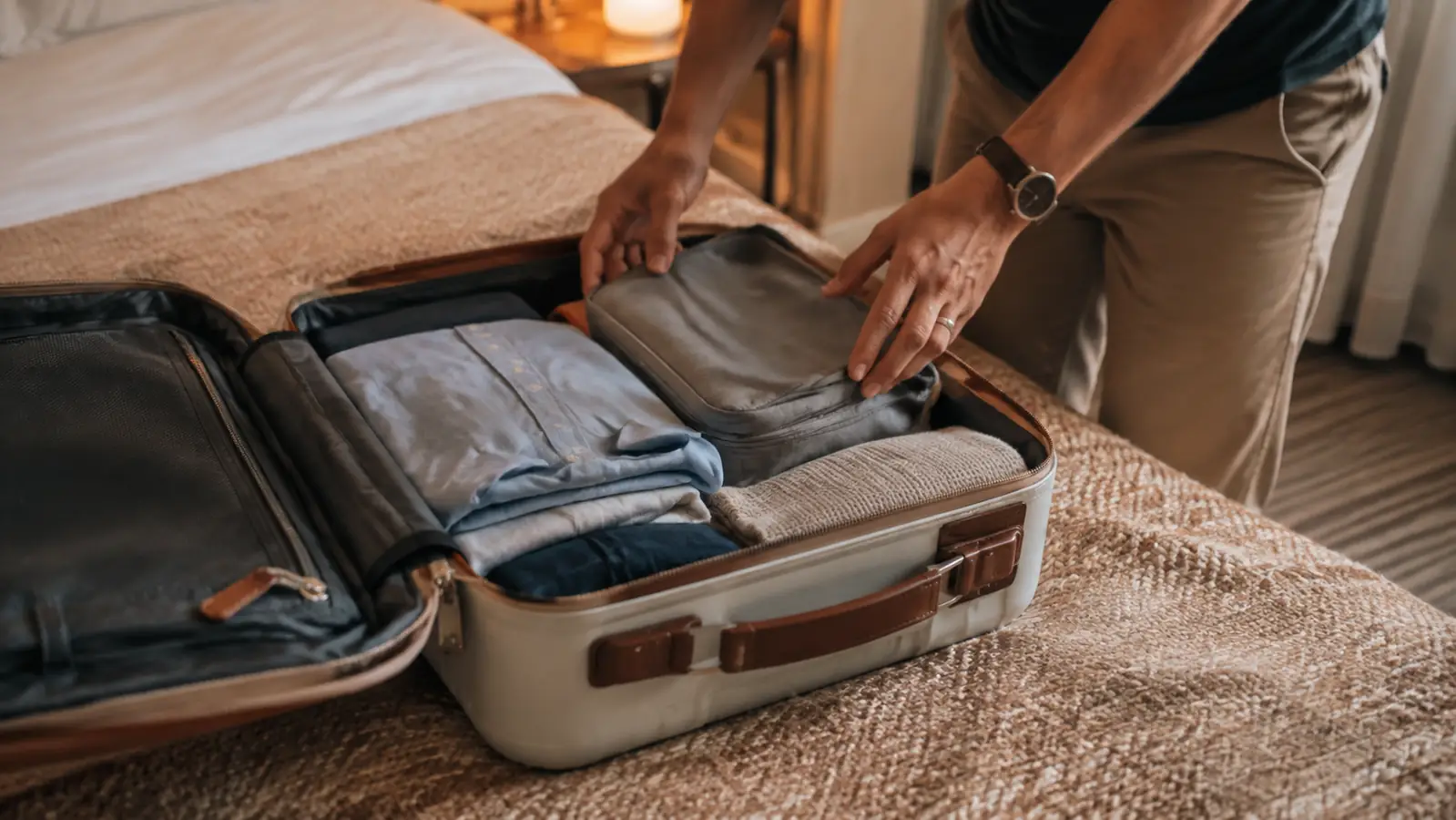
Weighing on the bed, with the bag lying flat and the unit on, before I close it, became my rule. That lets me move one heavy bottle out of a side pocket and read the consequence before I choose what stays. Done before I finish rather than after, it lets me shift the heaviest item to a safe corner instead of learning at the desk that the whole load moved wrong. It is the most useful packing habit this tool helped me build.
Who This Is For
The single bag pros who never stand at a counter scale do not need it. This is for the frequent like me who mainly carries on and, a few times a year, actually checks a bag and does not want to gamble on the desk. If you fly on a carrier with a stated 50 pound or 23 kilo limit, and you own one suitcase you fill with real judgment, this little gauge is worth more than the fee it usually keeps you from paying. It is also a smart pack for anyone who packs a kitchen gift now and then, the trip where a checked bag suddenly appears on the itinerary.
And it earns a place for the traveler who does the worrying in the family. That is honestly why it works for me. I would rather know a number calmly at 10 in my own room than stand in front of a gate agent who has heard three excuses already this morning.
Who Should Skip It
Skip it if you only ever fly carry on with a soft bag whose handles you are done fighting, because the hook will only add a step to a routine that does not need one. Skip it if you weigh at home once a season and do not want one more small gadget in a drawer. And skip it for certain if a bad shoulder or a strained lower back makes lifting a full suitcase by a short strap an actual effort, because that lifting motion is the one thing this scale cannot do for you.
For everyone else, the honest close holds. I still pack it in the bag every trip, even though I know its quirks and even though the plastic feels cheap. It is a small, accurate, reliable little scale that takes the guess out of one of the most expensive small questions a traveler answers. The bonus is that it stayed honest with me for three years. That is harder to find than the low price, and it is the reason I would still pick this one again.
If you have ever lingered at a check-in counter hoping you are under, this is your fix.
Weigh it in the room, know before you load the car, and check the bag with the confidence of the exact number. It is a small thing that takes a whole class of surprise fee out of your trip.
Amazon Check Today's Price on Amazon →